Behind the scenes of GTA development

From the days of DMA Design to the RAGE engine: how each Grand Theft Auto was developed, the technical decisions, the cuts and the controversies.

See the full dossier
Behind the scenes

Behind the development

real story separate from lore

Saga technology

from the DMA engine to RAGE
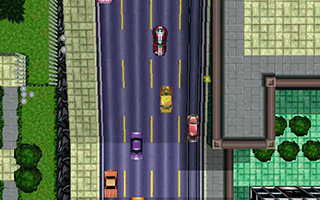
Official Grand Theft Auto screenshot
Grand Theft Auto (1997), made on the DMA Design engine
1995–1999
Own technology · GTA 1, London and GTA 2 · 1995–1999

Engine by DMA Design (2D era)

Before any middleware, GTA ran on technology written within DMA Design, in Dundee, born from the Race'n'Chase prototype. The city was assembled into blocks and viewed from above: what seems simple today was, in 1997, an entire urban simulation — traffic, pedestrians, police and radio — running on PCs and the original PlayStation.

04/04/1995
start of the Race'n'Chase project
3
cities in GTA 1997
Technical dossier ›
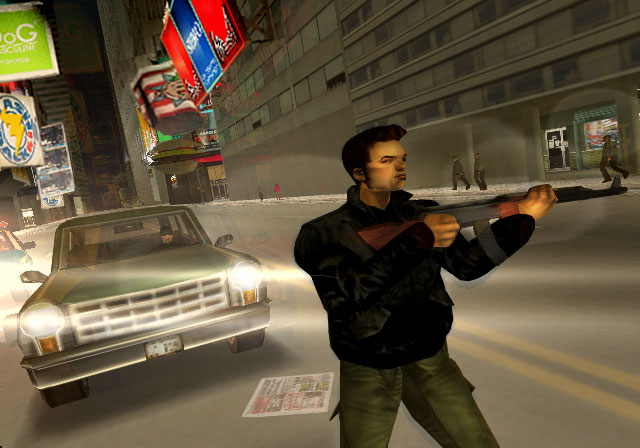
Official screenshot of Grand Theft Auto III
Grand Theft Auto III, built on RenderWare
2001–2006
Criterion middleware · 3D era technical foundation · 2001–2006

RenderWare

RenderWare was the most used graphics middleware of the PlayStation 2 generation — and it's what Rockstar built GTA III, Vice City and San Andreas on. When Electronic Arts bought Criterion, owner of the technology, in 2004, Rockstar began to depend on a tool controlled by a direct competitor. The answer was RAGE.

3
Top GTAs in RenderWare
2004
EA's purchase of Criterion
Technical dossier ›
Image of Rockstar Advanced Game Engine via GTA Wiki
GTA Wiki - Rockstar Advanced Game Engine
2006–today
Rockstar proprietary engine · HD era · 2006–today

RAGE — Rockstar Advanced Game Engine

RAGE is the proprietary engine that Rockstar has been using since 2006. It was born from Angel Studios technology, debuted in a ping pong game, took GTA to high definition with GTA IV and, twenty years later, supports GTA V, Red Dead Redemption 2, GTA Online and GTA VI. No other piece explains so well why Rockstar's cities feel alive.

2006
debut (Table Tennis)
11
main games on the engine
Technical dossier ›
Image of Euphoria via GTA Wiki
GTA Wiki - Euphoria
2008–today
Real-time behavioral animation · GTA IV onwards

Euphoria (NaturalMotion)

Euphoria is the reason a GTA pedestrian never falls the same way twice. Instead of playing recorded animations, NaturalMotion's technology simulates the body, muscles and reflexes and decides, at each instant, how the character reacts to a push, a shot or a bumper.

fev/2007
partnership announced with Rockstar
GTA IV
first game with Euphoria
Technical dossier ›

Game-by-game production

staff, budget, cast, sales and controversies
Image of Grand Theft Auto (1997 game) via GTA Wiki
GTA Wiki - Grand Theft Auto (1997 game)
DMA Design / 1997
6 mi · units until Mar/2001

GTA 1

Born from the shift of focus from Race'n'Chase to free urban crime. Top-down, radios, police and chaos become the base of the franchise.

Frames
Created at DMA Design., Associated with David Jones and Mike Dailly., Systemic freedom was more important than a tight plot.
2D UniverseTop-down
Complete production ›
Image of Grand Theft Auto III via GTA Wiki
GTA Wiki - Grand Theft Auto III
Virada 3D / 2001
97 · Metacritic (PS2)

GTA III

Turns GTA into a 3D city playable in third person, with voiced missions, radio and layered urban systems.

Frames
Liberty City becomes a three-dimensional space., Model influences the entire industry., The franchise's modern identity takes hold.
3D UniverseLandmark
Complete production ›
Image of Grand Theft Auto: Vice City via GTA Wiki
GTA Wiki - Grand Theft Auto: Vice City
Atmosphere / 2002
95 · Metacritic (PS2)

Vice City

Fast development after GTA III. The idea grew from an expansion/mission pack into a full game with a speaking protagonist and an 80s identity.

Frames
Strong inspiration from 80s crime cinema., The licensed soundtrack became part of the experience., Tommy Vercetti creates a more defined narrative center.
3D UniverseRelated prequel
Complete production ›
Image of Grand Theft Auto: San Andreas via GTA Wiki
GTA Wiki - Grand Theft Auto: San Andreas
Maximum scale of the 3D era / 2004
27.5 mi · units until 2011

San Andreas

Expands the formula with three cities, countryside, desert, customization, skills, territory, gyms, and aviation.

Frames
Map far larger than earlier entries., Light RPG elements and body customization., Themes of gangs, family and police corruption.
3D UniverseState
Complete production ›
Image of Grand Theft Auto IV via GTA Wiki
GTA Wiki - Grand Theft Auto IV
HD era/2008
98 · Metacritic (consoles)

GTA IV

Entry into the RAGE/HD era, with a more realistic Liberty City, Euphoria physics and a darker narrative.

Frames
Continuity reboot., A dramatic, noir tone., Focus on immigration, trauma and capitalism.
HD UniverseLiberty City
Complete production ›
Image of Grand Theft Auto V via GTA Wiki
GTA Wiki - Grand Theft Auto V
Global phenomenon / 2013
~230 mi · units (Take-Two, FY 2026)

GTA V

Three playable protagonists, planned heists, and Los Santos/Blaine County on a massive scale. GTA Online is born from the same ecosystem.

Frames
Michael, Franklin and Trevor alternate perspective., Heists structure the campaign., GTA Online transformed the game's life cycle.
HD UniverseThree protagonists
Complete production ›
Official cover of Grand Theft Auto VI
Next chapter / 2026
19/11/2026 · launch

GTA VI

Rockstar introduces Leonida and modern Vice City, with Lucia and Jason as the central duo. Current official date: November 19, 2026.

Frames
Set in the state of Leonida., Vice City returns., Lucia and Jason are the protagonists., PS5 and Xbox Series X|S confirmed.
HD UniverseGTA VI
Complete production ›
Connections and betrayals

Red lines of the saga

Catalina: San Andreas to GTA IIIChronological connection

Catalina appears in 1992 with CJ and, years later, betrays Claude in Liberty City.

Leone Family: Las Venturas, Liberty and GTA IIICrime family

Salvatore connects San Andreas, Liberty City Stories and GTA III, showing the continuity of the 3D mafia.

Liberty City diamondsCross narrative

GTA IV, The Lost and Damned and The Ballad of Gay Tony show the same conflict from different angles.

Michael, Trevor and North YanktonBetrayal

The 2004 lie is the emotional axis of GTA V, reactivating friendship, betrayal and paranoia.

Franklin in GTA OnlineHD Continuity

The Contract confirms an older Franklin as a successful businessman, reinforcing the Option C reading.

Vice City 1984, 1986, and 2026Echo between universes

Vic and Tommy define the 3D era; Lucia and Jason return to the city in a different narrative universe.

Recommended order

How to play to understand better

Modern order for understanding the narrative
  1. GTA III
  2. Vice City
  3. San Andreas
  4. Liberty City Stories
  5. Vice City Stories
  6. GTA IV
  7. Episodes from Liberty City
  8. Chinatown Wars
  9. GTA V
  10. GTA Online
  11. GTA VI
Internal chronological order
  1. London 1961
  2. London 1969
  3. Vice City Stories
  4. Vice City
  5. San Andreas
  6. GTA 1
  7. Liberty City Stories
  8. GTA Advance
  9. GTA III
  10. GTA IV + Episodes
  11. Chinatown Wars
  12. GTA V
  13. GTA Online
  14. GTA VI
Order by historical impact
  1. Grand Theft Auto
  2. GTA III
  3. Vice City
  4. San Andreas
  5. GTA IV
  6. GTA V
  7. GTA Online
  8. GTA VI
Cultural impact and controversies

Outside the gaming universe

Urban open world as the dominant language

GTA III popularized a template that became design vocabulary: urban map, missions, police systems, lateral freedom and cinematic storytelling.

Cultural satire

Radios, ads, fake brands, talk shows and pedestrians turn every city into a critique of consumerism, politics, media, celebrity and American paranoia.

Controversies

The series is historically a target of debate over violence, age ratings, representation and sexual content. San Andreas also became associated with the Hot Coffee case, one of the milestones of controversy in games.

GTA Online and live-game economy

GTA Online redefined GTA V's longevity, but also brought debates about grind, microtransactions, internal inflation and preservation of the traditional single-player.